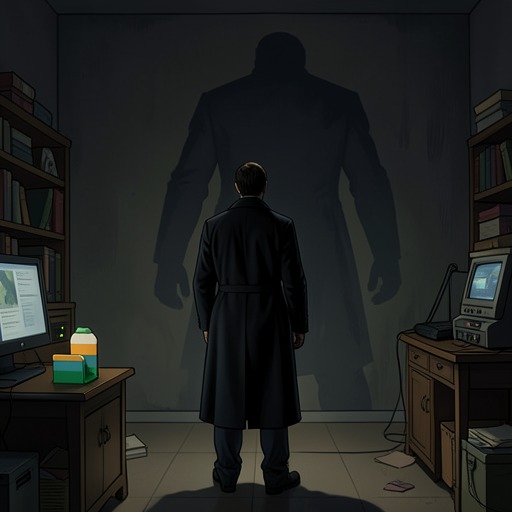
What Was Meant to Kill Me Only Made Me Stronger and Sharper
I'm Still Here- What didn't kill me made me stronger and sharperWhat Was Meant to Kill Me Only Made Me Stronger and Sharper is the survival refrain through which Jensen Brick McCall reinterprets a life marked by abandonment, grief, and guilt. Repeated at the story’s close, it does not deny the harm he has suffered or caused; it gives survival a direction, turning a history once understood as evidence that he was unwanted into a reason to live, connect, and build a family.
Identity and First Meaning
The expression’s force begins in Jensen Brick McCall’s account of his birth. He says that his mother tried to abort him at 26 weeks; after the procedure failed, he was left in a dark room on a table to die. Grace McCall, the nurse who first cared for him, saved his life, while his mother, informed that he was still alive, told the staff to let him die. Jensen therefore calls her his murderer: the word names not a literal killing but the wound of having survived an attempted death without being wanted by the person who gave birth to him.
That history shapes his first understanding of survival as mere existence. He describes living through circumstances in which he believed he was supposed to die, sleeping on library steps, being raped, and being treated as an unwelcome guest in foster homes. In his account, the refrain supplies a counter-reading: survival may have left him with pain and uncertainty, but it may also have made him stronger and sharper. The expression does not erase what happened; it contests the conclusion that those events are all his life can mean.
Loss, Guilt, and the Search for Purpose
The refrain also bears the weight of deaths Jensen believes he failed to prevent. Chyna was his closest friend after Grace McCall died. They had met in a foster home while fighting off her sons’ sexual attack, and Chyna came to see him as a brother, though he wanted to love her. When gang members murdered Chyna and her son, Mortez Payne, Jensen held their bodies and closed their eyes. He later told Officer Dartes about the crimes, but he continued to describe his earlier silence as a crime of his own and to carry guilt for not saving them.
That guilt becomes part of the purpose he assigns to his survival. Jensen says that Chyna’s death was connected to his betrayal of the gang, and that finding her justice required him to leave Syracuse and seek the answer to why his birth mother had not wanted to raise him. He casts this search as a mission: his story, he hopes, can help another young man understand why he is still alive and keep pursuing happiness and freedom. In that framing, strength is not invulnerability. It is the effort to turn grief and remorse into action, even while the losses remain unresolved within him.
Refrain in Relationships and Recovery
When Jensen finally sits beside his birth mother, his anger is divided against a longing for her love. He refuses at first to meet her eyes because he fears that doing so will open the way to understanding and forgiveness; at the same time, he recognizes her guilt and feels the need for connection. His description of her as both mother and murderer holds those conflicting truths together. The expression’s idea of becoming stronger through what should have destroyed him is thus tested not only by survival, but by whether he can face the past without reducing himself or his mother to a single name.
The refrain’s movement toward recovery also appears in Jensen’s relationship with Janae Morrison. He recognizes that she is still hurt by Robert Walters and tells her that this is not the time for sex: he wants her to stop cutting herself, address her drug use, and build her confidence before they become more deeply involved. Janae seeks help from Inya, who offers assistance and later counters the belief that Janae is bad energy by asking her to repeat that she is not. These moments place survival in the work of recovery and in the support people offer one another, rather than in a claim that suffering has automatically made them whole.
Jensen and Janae eventually speak of beginning their lives again and leaving their past behind, while acknowledging their mistakes and their shared sense of being misfits. He wants a life with her and a family; she agrees, while insisting that there be no more lies between them, even when the truth hurts. The promise of a new beginning echoes the refrain but does not make it a simple triumph: the couple’s future depends on honesty and continued effort, not on pretending that the past has vanished.
Fulfillment and Closing Significance
One year later, the story gives the expression a concrete family setting. On Christmas Day, Janae gives birth to their daughter, Grace Pearl McCall. Jensen is now a husband, a father, and part of a family gathered around a table; his birth mother has become his mother in the life they share. He has also donated a kidney to her, enabling her to watch her younger children grow up. The relationship that began in the pain of attempted abandonment has changed into one marked by reconciliation and care, without making the earlier wound disappear.
The closing family scene completes the refrain through images of belonging: Ginger Pearl holds her great-granddaughter and gives her a crystal, continuing a tradition for each grandchild, while Janae takes a family photograph. Jensen says, “What was meant to kill me only made me stronger and sharper.” The final assertion expands that wording: “I am Still Here because I had to grow through to this perfect moment.” The expression therefore links physical survival to the harder process of growing into trust, kinship, and responsibility. Its resolution is not that every loss has been repaired or that the family is perfect, but that Jensen has found a place within a family of his own and understands his survival as more than an accident.